Blurred or distorted vision, which is often not correctable with regular glasses or standard contact lenses, can result from keratoconus and other irregular corneal conditions.
At Reform Vision, we assess each patient’s corneal health, visual needs, and ocular surface prior to prescribing a specialty contact lens option. Options may include scleral lenses, corneal RGP lenses, Rose K2 lenses, hybrid lenses, or piggyback lens systems depending on the individual eye.
Not one contact lens works for all people with keratoconus.
The choice of lens depends on the shape and severity of corneal irregularity, vision, previous treatment, ocular surface health, comfort and individual visual needs.
A complete evaluation will help determine which type of lens design may be best for your eyes.
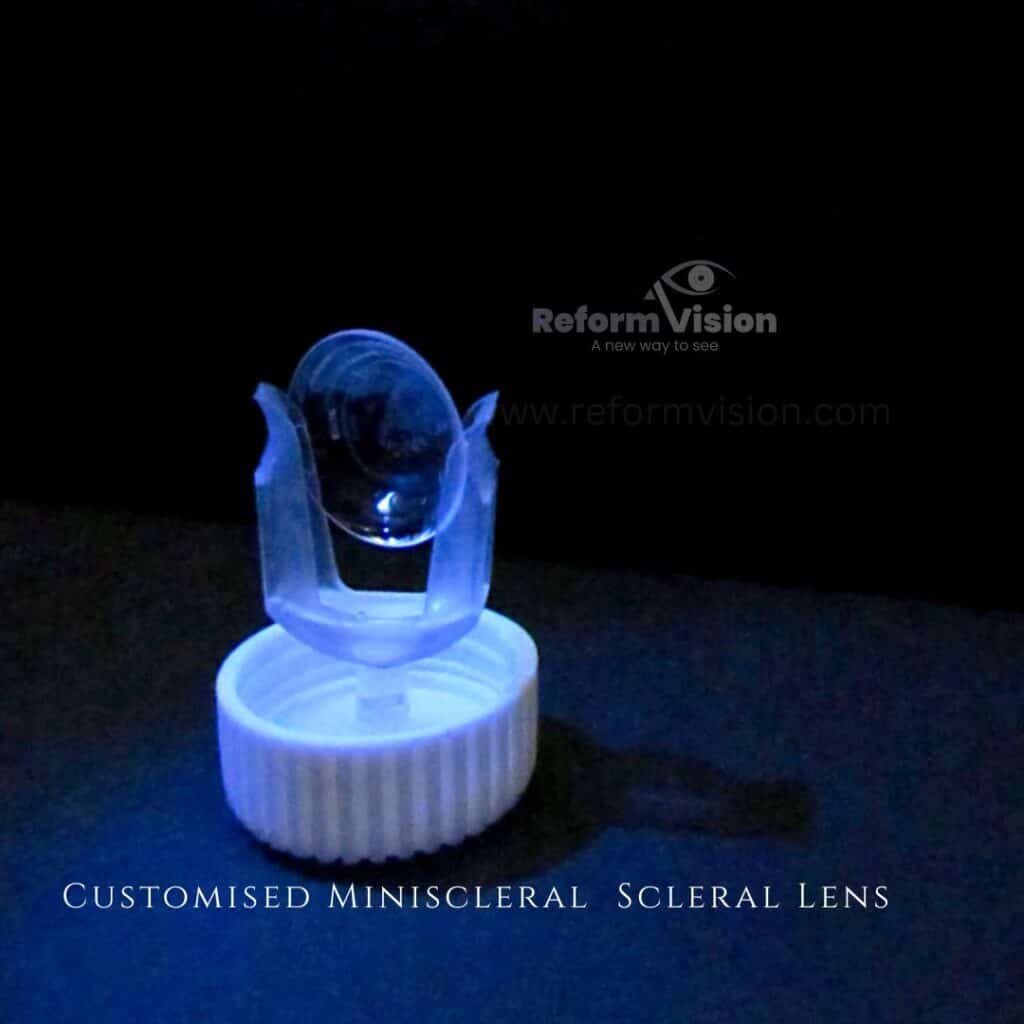
Scleral lenses are larger diameter rigid contact lenses that vault over the cornea and sit on the sclera, or white part of the eye.
Before inserting the lens, the space between the lens and the cornea is filled with preservative-free saline. This provides a smooth optical surface over an irregular cornea and may provide improved functional vision and comfort for appropriate patients.
Scleral lenses are an option for keratoconus, post-surgical corneal irregularity and other irregular corneal conditions.
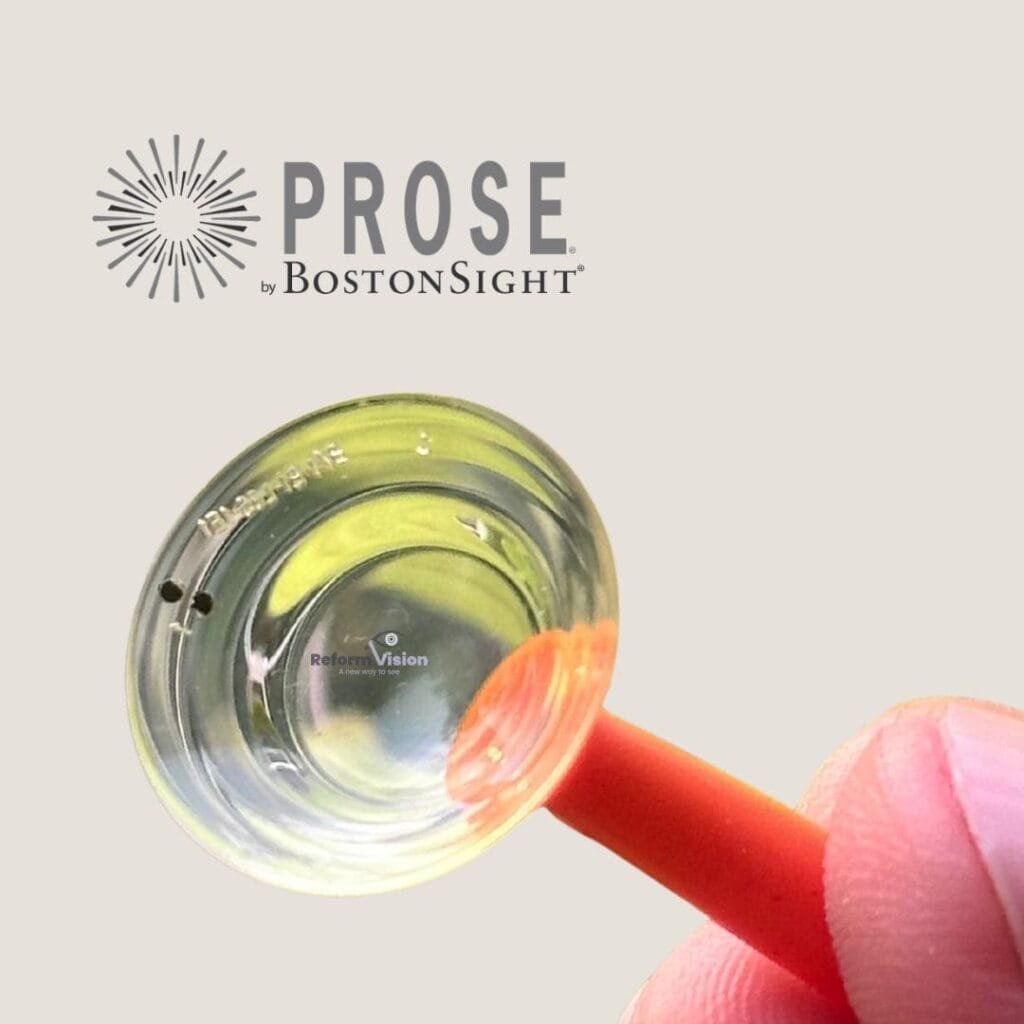
PROSE (prosthetic replacement of the ocular surface ecosystem) is the use of custom-designed prosthetic devices to aid visual rehabilitation and ocular surface management in selected patients with complex corneal or ocular surface disease.
Whether PROSE is appropriate is determined by the patient’s diagnosis and clinical findings.
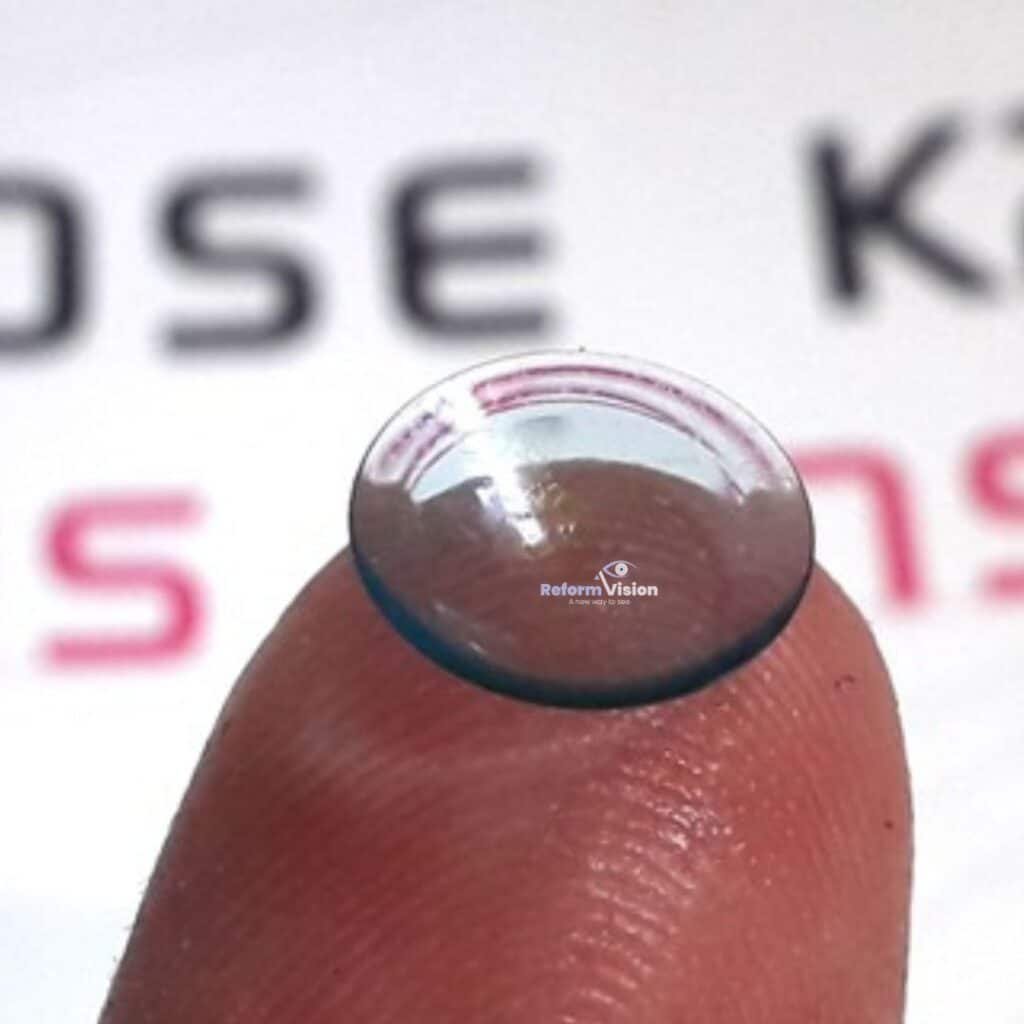
Rose K2 lenses are rigid gas permeable lenses designed specifically for the cornea, for use on keratoconus and other irregular corneal shapes.
Their design allows for the lens parameters to be adapted to the shape of the cornea.
Rigid gas-permeable (RGP) lenses offer a more regular optical surface over an irregular cornea and may improve vision in selected patients with keratoconus.
Suitability depends on corneal shape, severity of the condition, lens tolerance and other clinical factors.
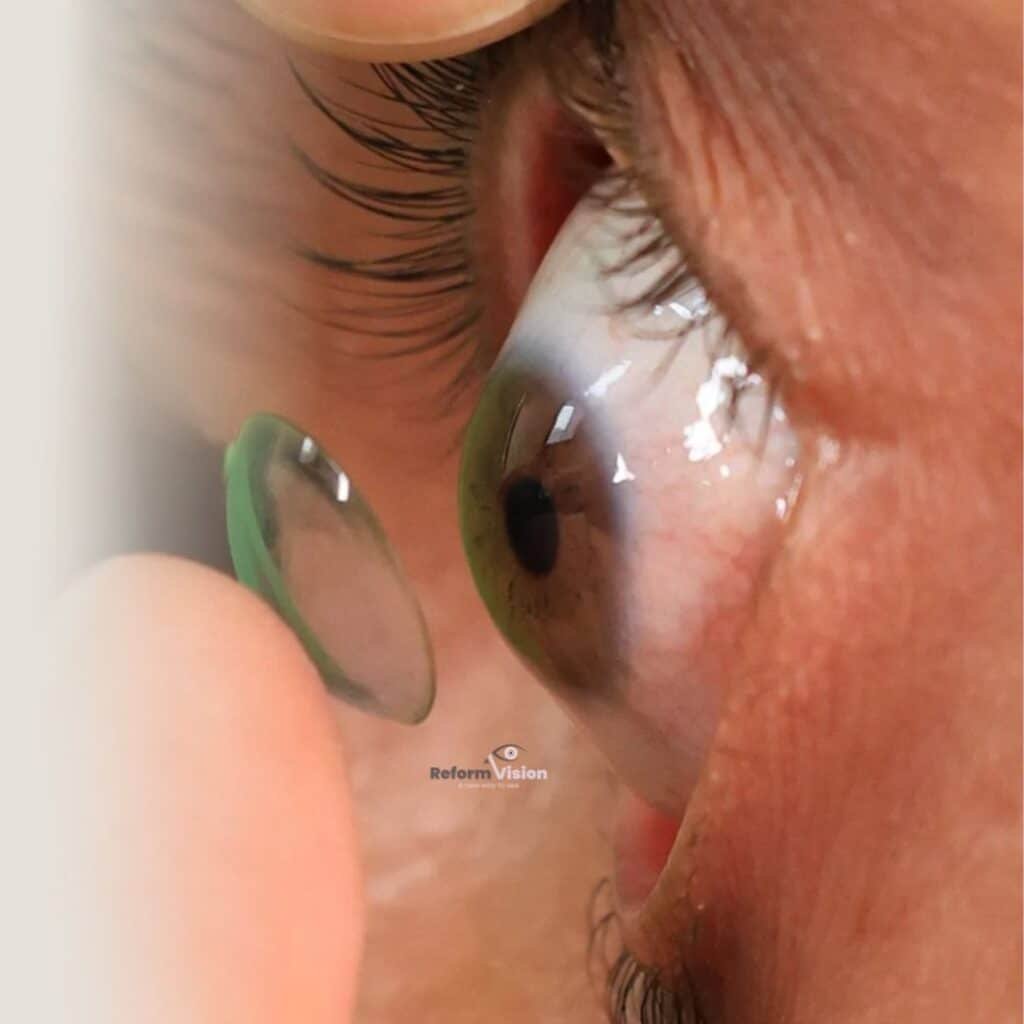
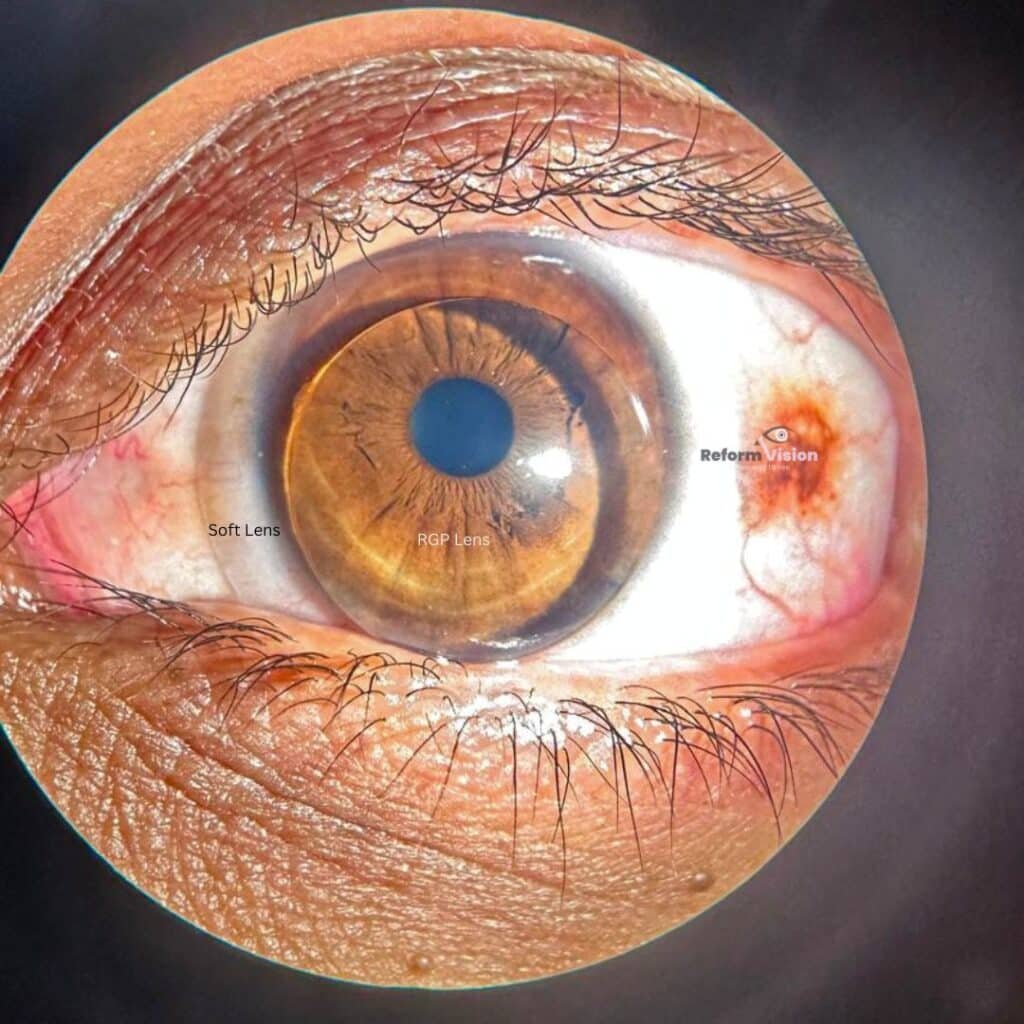
Piggyback system The wearing of a soft contact lens with an RGP lens on top of it.
It may be considered in selected patients who need the optical benefits of an RGP lens but have issues with lens comfort or stability.
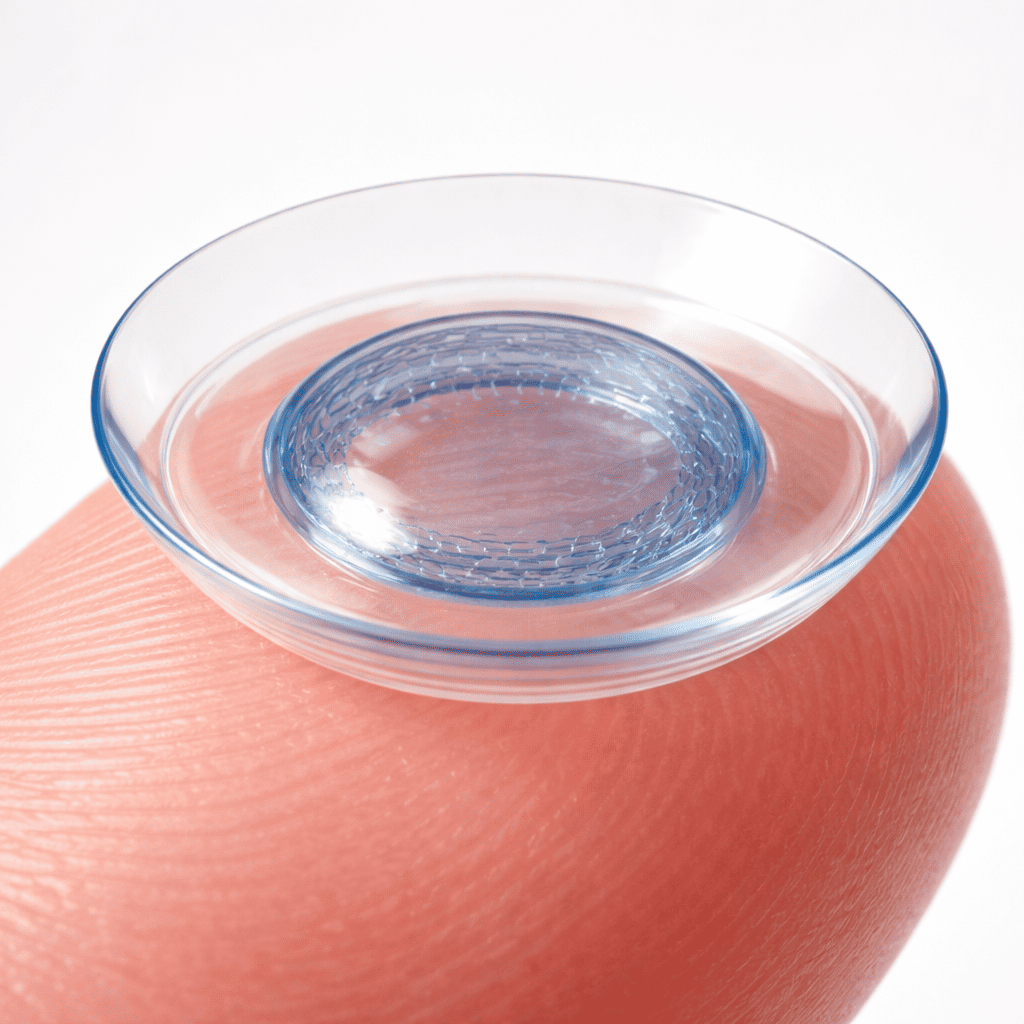
Hybrid contact lenses consist of a rigid optical zone in the centre and a soft peripheral skirt.
Selected patients with keratoconus or irregular corneas can be considered based on their visual and fitting needs.
Keratoconus can give two people very different corneal shapes and vision needs.
We examine the eye to understand the corneal condition, ocular surface, and visual requirements before recommending a specialty contact lens. These results are useful for selecting and fitting the lenses.
Where clinically indicated, the assessment may include corneal topography, slit-lamp examination, anterior segment imaging, and ocular surface evaluation.
Patients can use clinical imaging to see how specialty lenses are assessed and fitted.

Corneal Topography
Mapping the cornea shows us its shape and irregularities.
Scleral Lens on AS-OCT
Anterior segment OCT can be used to evaluate the relationship between the cornea and the scleral lens.
Fitting of Scleral Lenses
The lens is checked on the eye for such things as position, clearance and general fitting characteristics.
Clinical images are shared with appropriate patient consent for educational purposes. Individual results and treatment outcomes may vary.
The diagnosis of keratoconus alone does not determine the most appropriate lens.
Some patients will do well with corneal RGP or Rose K2 lenses, while others may benefit from scleral or other specialty lens designs. The recommendation should be made on an individual clinical assessment.
Scleral lenses can provide a regular optical surface over the cornea, which can improve the functional vision of many people with an irregular cornea. How much improvement is possible depends on the individual eye and other factors that may affect vision.
Scleral lenses are primarily used for visual rehabilitation and selected ocular surface management. They are not a substitute for treatments aimed at slowing the progression of keratoconus. An ophthalmologist should evaluate patients with possible progressive keratoconus for appropriate medical or surgical management.
Specialty contact lenses can be used to achieve visual rehabilitation for some patients after corneal cross-linking. The choice of lens and its timing should be based on an assessment of corneal health and stability.
No. The lens is chosen according to the individual eye. Some patients may be better suited for RGP, Rose K2, scleral, hybrid, or other specialty lens designs.
If you have keratoconus or an irregular cornea and are having difficulty achieving satisfactory vision with glasses or conventional contact lenses, a specialty contact lens evaluation can help determine which options may be suitable for your eyes.
The information on this page is a patient education resource and is not a substitute for professional medical advice. The treatment and visual results are different according to the condition of the patient.
Reekham Lal, M.Optom, PhD Scholar
Fellowship in Advanced Contact Lens (LV Prasad Eye Institute Hyderabad)
Specialty Contact Lens Consultant
Last medically reviewed on July 2026