“I had C3R… but my vision is still blurry”
If you’ve undergone Corneal Collagen Cross-Linking, you might expect your vision to improve immediately.
But many patients notice:
• Vision is still blurry
• No major improvement in clarity
• Sometimes vision even feels slightly worse initially
This often leads to confusion or concern.
What does C3R actually do?
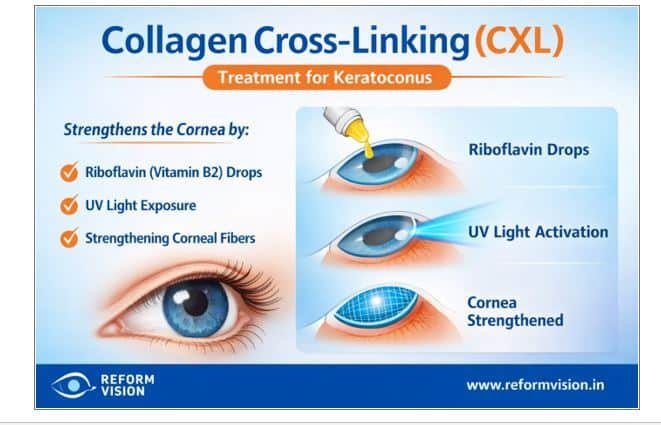
C3R is designed to:
• Stop keratoconus progression
• Strengthen (stiffen) the cornea
• Prevent further worsening
But here’s the key point:
C3R is not a vision-correcting procedure
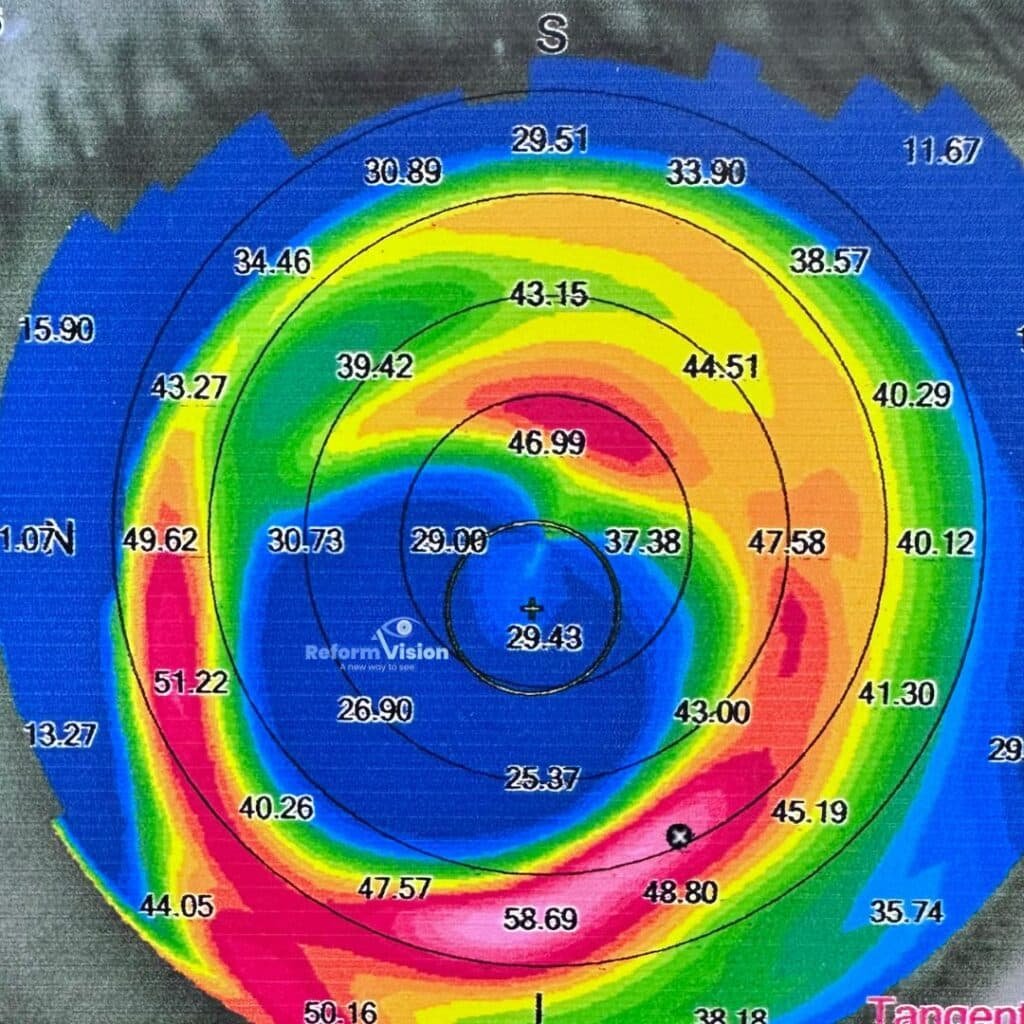
It stabilizes the cornea—but does not fully regularize it.
Why vision is still not perfect after C3R
Even after successful C3R:
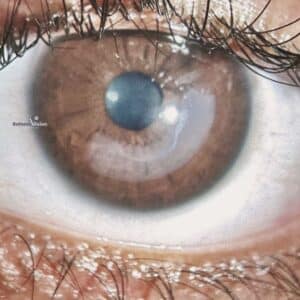
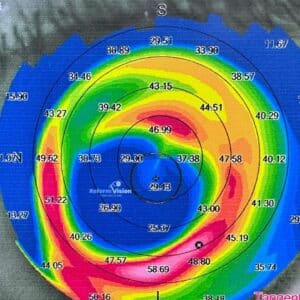
• The cornea may remain irregular
• Existing astigmatism is still present
• Light still scatters
So patients often feel:
“The disease has stopped, but vision is still not clear.”
And that is completely expected.
Why glasses may not be enough
After C3R, many patients try new glasses but feel:
• “Clarity is still not sharp”
• “I see ghosting or shadowing”
This is because:
• Glasses correct only simple refractive errors
• They cannot fix irregular corneal shape
The missing step: Visual rehabilitation
C3R is just step 1 (stability)
The next step is vision correction
And this is where specialty contact lenses come in.
Best option after C3R
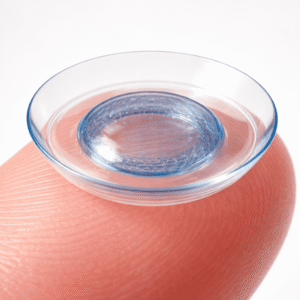
Scleral lenses (most effective solution)
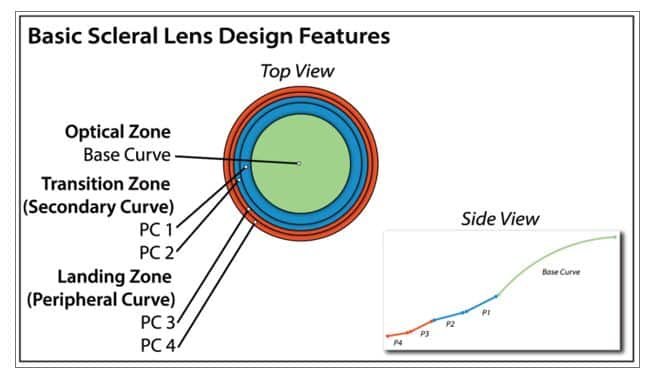
Scleral lenses are ideal after C3R because they:
• Vault over the irregular cornea
• Create a smooth optical surface using a fluid layer
• Provide stable and high-quality vision
What patients experience:
• Sharper vision
• Reduced distortion and ghosting
• Better comfort
Many patients achieve 6/9 or better vision with proper fitting
Other options (selected cases)
• RGP lenses → good clarity but less comfort
• Hybrid lenses → balance of comfort and clarity
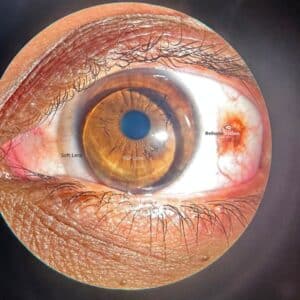
• Soft lenses → limited benefit in irregular cornea
In most keratoconus cases post-C3R, scleral lenses give the best outcome.
When can you start contact lenses after C3R?
• Usually after 4–6 weeks (epi-off cases)
• Once the cornea stabilizes
• Based on your doctor’s advice
Early fitting in the right cases can improve patient confidence.
Important precautions
After C3R:
• Avoid self-trial of lenses
• Ensure proper fitting
• Maintain regular follow-up
This ensures both safety and best visual results.
Our approach at Reform Vision
We regularly manage patients:
• After C3R
• With keratoconus at different stages
• Who still struggle with vision despite treatment
Our focus:
• Customized scleral lens design
• Advanced corneal imaging
• Long-term visual rehabilitation
The goal is simple:
Stabilize the disease + restore clear vision
What results can you expect?
With the right contact lens:
• Vision becomes clearer and more stable
• Daily life becomes easier
• Confidence improves
Many patients feel they finally achieve the vision they were hoping for.
Final takeaway
If your vision after C3R:
• Is stable but not clear
• Still has blur or distortion
This is normal—and treatable.
C3R stops progression.
Contact lenses restore vision.
What should you do next?
If you or your patient has undergone C3R and still has unclear vision:
A specialty contact lens evaluation can make a life-changing difference.