Anisometropic amblyopia, which is often called “lazy eye” because the two eyes don’t focus equally, is a unique problem, especially for teens and adults. Glasses or patching are common treatments, but they don’t often fix problems with binocular vision or help people reach their full visual potential.
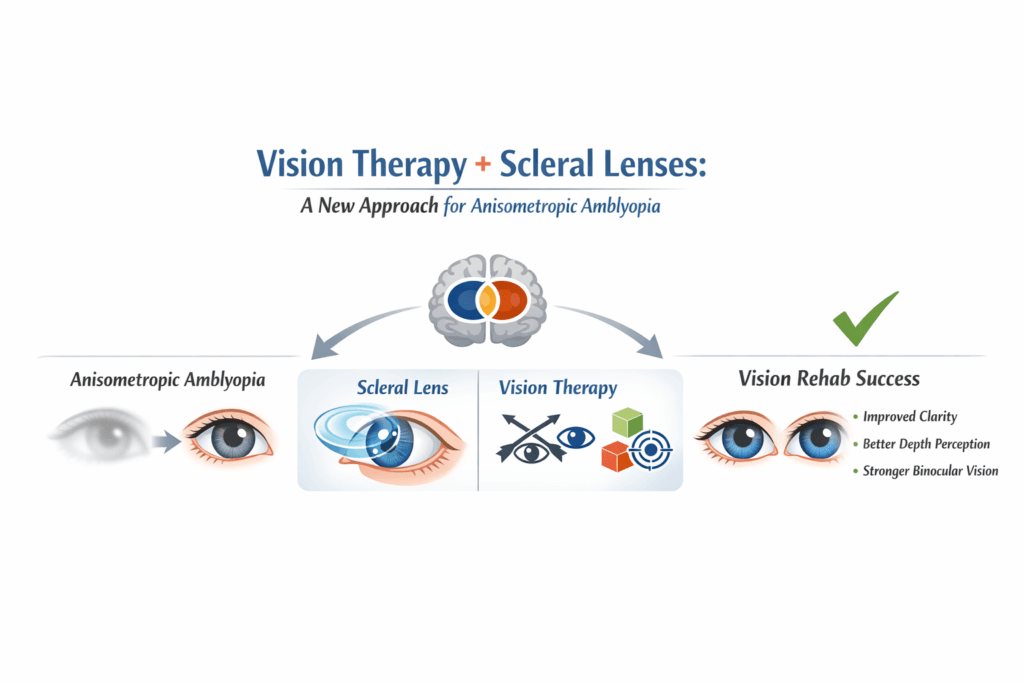
A combination of scleral lenses and personalized vision therapy is becoming a strong, non-invasive treatment for complex anisometropic amblyopia in 2025. This blog post talks about how these two treatments work together to improve fusion, restore clarity, and make binocular function stronger
What is anisometropic amblyopia?
Amblyopia happens when one eye has a different refractive error than the other, such as myopia, hyperopia, or astigmatism. This usually means that the difference is greater than 1.5 diopters.
🔹 Signs that are common
- Vision that is blurry or blocked in one eye.
- Bad depth perception
- Eye strain or tired eyes
- Hard to read or focus
- Not being able to see in 3D (stereopsis)
🔹 Who Gets It?
Kids who weren’t corrected right away.
Teenagers who have different prescription drugs but don’t know it Adults who have had bad vision in one eye for a long time.
Why Standard Glasses Often Don't Work: Glasses make the size of images (aniseikonia) different between eyes.
- High prescriptions make things look like they are bending.
- The brain might block out the image from the weaker eye.
- Even if things get clearer, binocular vision doesn’t fully develop.
- This is where vision therapy and scleral lenses come in.
How Scleral Lenses Help with Amblyopia
- Why Scleral Lenses Are Good.
- Fixing all optical errors will give you high-definition vision.
- Lower aniseikonia by making the differences in magnification smaller.
- Give stable optics no matter how much your eyes blink or move.
- Make it more comfortable to wear all day, especially if you have a high prescription.
- Fix corneas that aren’t shaped right or eyes that have had surgery (common in older amblyopes).
- When to Use: When glasses or soft lenses don’t make things clearer.
- In amblyopia with corneal problems at the same time (like keratoconus or scars).
- When RGPs don’t work or make things look weird.
- Scleral lenses fix the symmetry of visual input, which makes binocular therapy possible.
How Scleral Lenses Help with Amblyopia
- A set of visual exercises that helps the brain and eyes work together better.
- Parts Eye tracking and alignment
- Stereopsis and depth perception
- Control of fusion and suppression
- Training for convergence and accommodation
- Visual processing that involves perception and thought.
- It is often given to people who have lazy eye, strabismus, convergence insufficiency, or trouble
reading.
How Vision Therapy Improves Amblyopia Results
Vision therapy teaches the brain how to use the weaker eye again after the vision is clear. This neuroplastic approach is very important, especially for older kids and adults.
- Makes the amblyopic eye’s visual cortex respond.
- Improves coordination between the eyes and hands.
- Makes fusion ranges better for using two eyes.
- Builds long-lasting visual focus.
- Lessens suppression and makes stereopsis better.
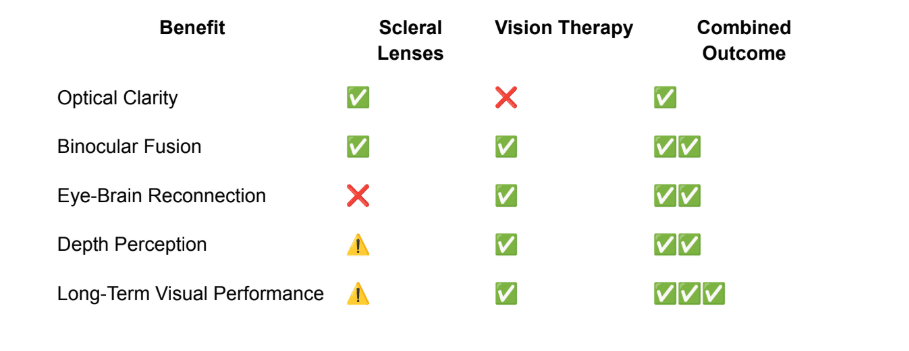
- Therapy works much better when you wear scleral lenses that give you clear, stable vision.
A Real-Life Example: An Adult's Success Story
A 21-year-old patient had 6/6 vision in one eye and 6/60 vision in the other because of anisometropic amblyopia (–2.00 vs –11.00 prescription). Glasses made things look weird and hurt the way they looked. Her vision got better to 6/12 after she got a mini-scleral lens. A four-month vision therapy plan came next. It focused on tracking, fusion, and depth perception. The final visual acuity went up to 6/9, and depth perception and reading speed both got better.
Conclusion
Anisometropic amblyopia doesn’t have to mean that your vision will always be out of balance. In 2025, a full path to visual rehabilitation will be available through the use of custom scleral lenses and neuro-optometric vision therapy. Patients of any age can get their clarity, coordination, and confidence back with hard work and expert help.
About the Writer
Reform Vision Hyderabad has a vision therapy expert and advanced scleral lens consultant named Reekham Lal. He treats complex amblyopia, keratoconus, and binocular dysfunctions with imaging and personalized therapy plans that work together.