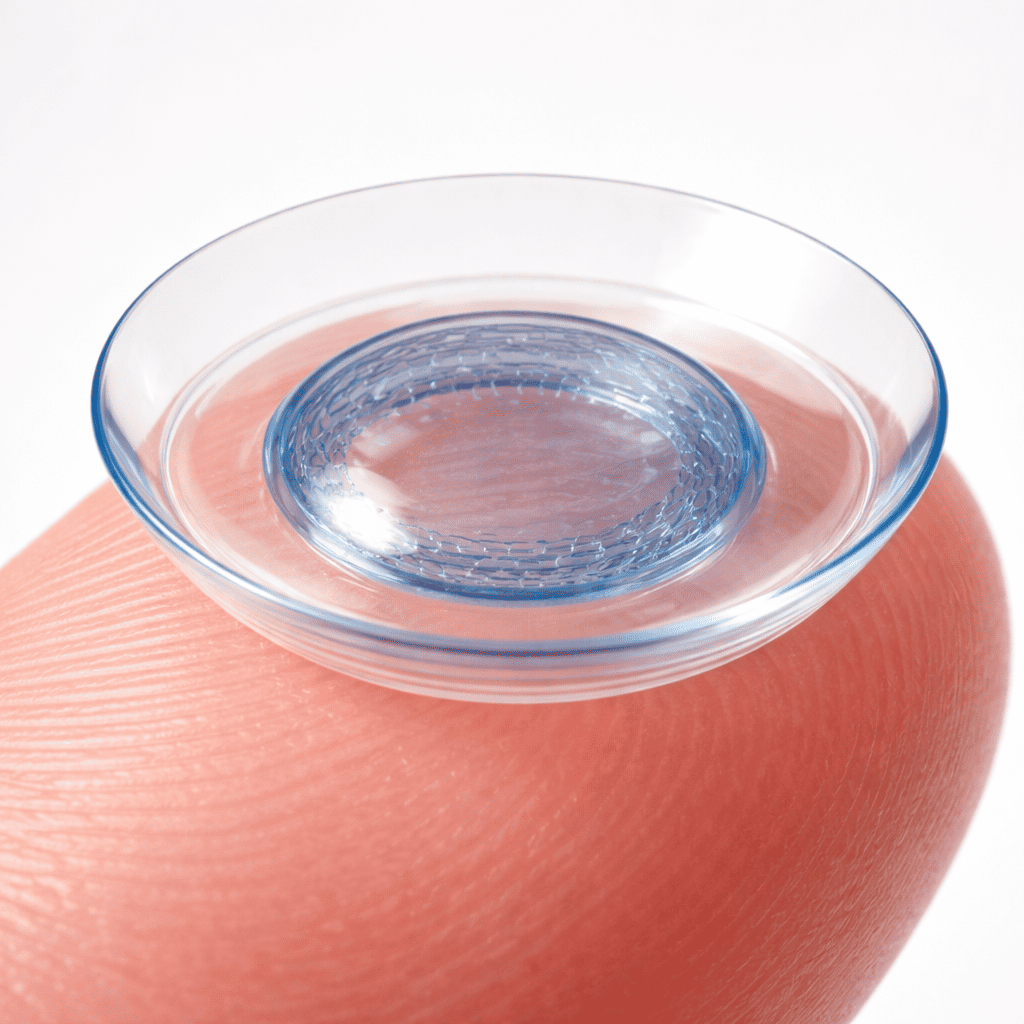
If you’ve ever tried rigid contact lenses for keratoconus, you probably already know this feeling:
👉 “Vision is amazing… but I just can’t tolerate the lens.”
This is one of the most common things patients tell us.
And honestly, it’s valid.
Rigid lenses give excellent vision—but not everyone can get used to that constant lens awareness.
This is exactly where hybrid contact lenses come in.
So, What Exactly Are Hybrid Contact Lenses?
A hybrid lens is designed to solve one simple problem:
👉 How do we give you sharp vision without compromising comfort?
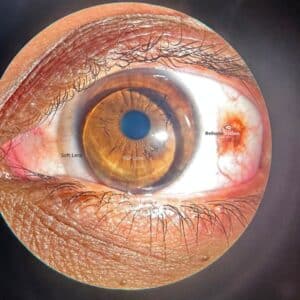
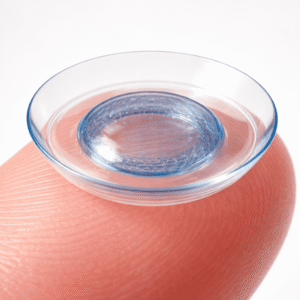
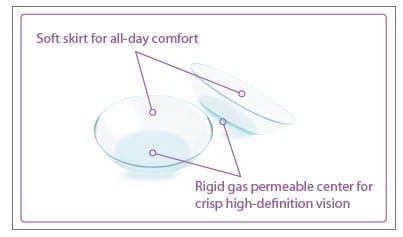
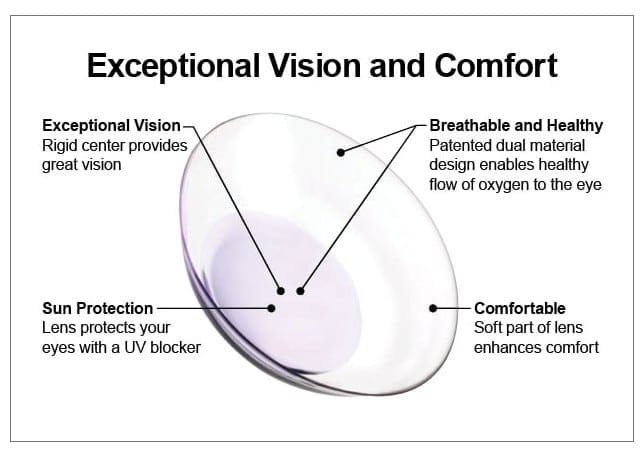
It does this by combining two designs into one lens:
• A rigid center → gives you clear, sharp vision
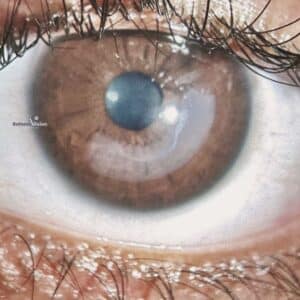
• A soft outer part (skirt) → makes it feel comfortable on the eye.
So instead of choosing between comfort and clarity…
you get a balance of both.
Who Usually Benefits from Hybrid Lenses?
In our clinical experience, hybrid lenses work well for patients who:
• Have keratoconus (early to moderate stages)
• Are not getting clear vision with soft lenses
• Tried rigid lenses but found them too uncomfortable
• Want something simpler than managing two lenses (like piggyback)
👉 It’s often the “middle path” between soft lenses and more advanced options like scleral lenses.
What Will You Actually Notice?
When patients switch to hybrid lenses, they usually tell us:
✔ “Vision is much sharper”
Because the rigid center corrects the irregular shape of the cornea.
✔ “It feels much more comfortable”
The soft skirt reduces that constant foreign body sensation.
✔ “It stays more stable”
Less movement compared to rigid lenses alone.
✔ “It’s easier to manage”
Only one lens per eye—no layering like piggyback systems.
From a Clinical Point of View
Without getting too technical, here’s what we see clinically:
• Vision quality is very similar to rigid lenses
• Comfort is significantly better in most patients
• Adaptation is faster and smoother
• Newer materials allow better oxygen flow, improving safety
👉 In many cases, hybrid lenses help delay or even avoid moving to more complex lens designs.
How Do We Fit Hybrid Lenses?
This part is very important—and often underestimated.
At Reform Vision, we don’t just “try a lens and see.”
We:
1. Study your corneal shape in detail
2. Select a trial lens based on your eye
3. Carefully check:
o How it sits
o How it moves
o How it interacts with your tear film
4. Fine-tune your vision
👉 The goal is not just fitting a lens—it’s getting it right for your eye.
Hybrid vs Piggyback vs Scleral — Which One Is Better?
This is probably the most common question.
The honest answer?
👉 It depends on your eye.
But here’s a simple way to think about it:
• Hybrid lenses → balance of comfort + clarity
• Piggyback lenses → useful when rigid lenses are not tolerated
• Scleral lenses → best comfort in advanced cases
There’s no “best lens”—only the right lens for the right eye.
A Few Practical Things to Know
Let’s keep this real:
• You’ll need to learn proper insertion and removal
• Cleaning routine is important
👉 But once you get used to it, most patients manage very comfortably.
How We Approach This at Reform Vision
We see a lot of patients who say:
👉 “I’ve already tried lenses… nothing worked.”
And many times, it’s not that lenses don’t work—
it’s that the right lens wasn’t chosen or fitted properly.
We focus on:
• Detailed evaluation (not rushed fittings)
• Understanding your lifestyle—not just your eye
• Long-term comfort and stability
Final Thoughts
Hybrid lenses are not for everyone—but for the right patient, they can be a game changer.
They give you:
• The clarity of rigid lenses
• The comfort closer to soft lenses
• A simpler alternative to piggyback systems
Not Sure If This Is Right for You?
That’s completely okay.
The best way to know is not guessing—it’s getting your eyes properly evaluated.
👉 Once we understand your cornea, we can guide you to what will actually work—not just what sounds good.